The Story Behind Jamaica’s Most Beloved Food Dishes
Jamaica’s best-loved dishes carry more than flavor. They carry routes, labor, memory, adaptation, and pride. To eat well in Jamaica is to taste the island’s history in layers: Indigenous knowledge, African survival, European trade, Indian indenture, Chinese migration, and the stubborn genius of cooks who learned to make something remarkable from whatever the day allowed. That is why jamaican food can feel at once bold and deeply familiar. It is inventive without trying to impress. It is practical, celebratory, and often built from methods that solved real problems long before they became culinary talking points.
Anyone who has spent time in a Jamaican market, a roadside cookshop, or a family kitchen knows that the food is not only about recipes. It is about timing, wood smoke, seasoning by hand, and the confidence to trust smell over strict measurement. A pot simmers until it tastes right. A fish is ready when the flesh firms and the gravy settles. A dough is judged under the palm, not by a timer. Those habits matter because they explain why many Jamaican dishes are hard to separate from the people who make them. The story sits in the technique as much as the ingredient list.
A cuisine shaped by movement and necessity
Jamaican cooking did not grow from one culinary line. It formed through collision and exchange. Before colonization, the Taíno people contributed ingredients and methods that still echo in the national kitchen, most famously cassava and barbecuing over open fire. Enslaved Africans brought agricultural knowledge, seasoning traditions, and an ability to transform humble provisions into sustaining meals. Later came salt cod from Atlantic trade routes, curry powders shaped by Indian influence, and pantry habits influenced by Britain and China.
This is https://andyajcv006.lumenforgex.com/posts/how-to-cook-authentic-jamaican-food-in-your-own-kitchen one reason Jamaican dishes often feel both rustic and sophisticated. The sophistication did not come from luxury dining rooms. It came from people learning how to preserve food in heat, stretch scarce meat, coax body from bones, and turn starches, herbs, peppers, and smoke into meals with character. In practical terms, a dish survived because it made sense. It fed families. It kept well enough. It used what the land, the market, or the fishing boat could offer. Over time, those practical dishes became emotional ones.
Jerk, the island’s most famous language of fire
No story about Jamaican food starts anywhere but jerk. Today, jerk is often reduced to a flavor label, slapped onto wings, sauces, or snack foods far removed from the original method. In Jamaica, jerk is not just seasoning. It is a cooking tradition with roots in resistance.
The technique is widely linked to the Maroons, communities formed by formerly enslaved Africans who escaped into the island’s interior and created independent settlements. In the Blue Mountains and other difficult terrain, stealth mattered. Meat had to be seasoned, preserved, and cooked in ways that minimized detection. Slow cooking over pimento wood, often in pits or covered setups, gave the meat its haunting fragrance while controlling flame and smoke. The seasoning itself developed around ingredients that were local and forceful: Scotch bonnet pepper for heat, allspice berries and leaves for warmth, thyme, scallion, garlic, ginger, and salt.
The result is one of the great balancing acts in world cooking. Good jerk is hot, but not thoughtlessly hot. It smells sweet before it burns. The allspice rounds the pepper, and the smoke joins both into something savory and almost floral. Pork remains the classic expression, especially in older roadside traditions, because fat handles slow fire beautifully. Chicken became more common as jerk moved into broader commercial life, partly because it is cheaper, cooks faster, and sells easily at beach stalls, cookshops, and festivals.
The best jerk cooks will tell you that marinade alone is not enough. The wood matters. The resting time matters. The ratio of direct heat to smolder matters. Even the cut matters. Boneless meat may be convenient, but bone-in pieces often hold moisture better and develop deeper flavor. This is one of those places where modern shortcuts create a decent result but rarely the full one. The difference between oven-roasted jerk chicken and jerk cooked over pimento wood is not subtle when you know what to look for.
Ackee and saltfish, a national dish with a complicated past
Ackee and saltfish is often the first meal visitors are encouraged to try, and with good reason. At its best, it offers a lesson in contrast: the soft, buttery ackee with its mild richness, and the flaky saltfish carrying salinity and chew. Add onion, tomato, scallion, thyme, black pepper, and sometimes Scotch bonnet, and the dish becomes more than the sum of its modest parts.
Its history is anything but simple. Ackee is not native to Jamaica. It came from West Africa, likely carried during the era of the transatlantic slave trade, and took root so thoroughly that many people outside the Caribbean assume it is indigenous. Saltfish, usually salted cod, reflects colonial trade systems and the economics of preservation. In other words, the dish joins an African fruit and a European-trade staple in one pan. Few plates better capture how Jamaica’s food history was built from pain, movement, and adaptation.
There is also the matter of skill. Ackee demands respect. If harvested or prepared improperly, it can be dangerous. Safe ackee is picked only when the fruit opens naturally on the tree. The edible yellow arils must be cleaned carefully, with the toxic black seeds and pink membrane removed. This is old kitchen knowledge in Jamaica, passed down as common sense. Locals know the difference between ripe ackee and fruit that should not be touched. For outsiders, this is one of those cases where tradition and food safety are perfectly aligned.
The dish also reveals Jamaican restraint, a quality outsiders sometimes miss. Not every beloved local meal is aggressively spiced. Ackee and saltfish works because it is not overloaded. Too much pepper flattens the fruit. Too much stirring breaks the ackee apart into mush. The cook needs a light hand. That subtlety is part of its charm.
Rice and peas, the weekly anchor
For many Jamaican families, Sunday dinner is unimaginable without rice and peas. It arrives with chicken, oxtail, curry goat, or stew, but it is never just a side. It is the meal’s center of gravity. The peas are usually kidney beans or gungo peas, depending on the season and the household. The rice cooks in coconut milk with thyme, scallion, garlic, allspice, and often a whole Scotch bonnet for scent rather than brute heat.
This dish says something important about Jamaican home cooking: patience builds flavor. The beans are cooked until they can season the liquid. The coconut milk softens and enriches. The aromatics perfume the pot. When done right, each grain stays distinct while carrying the flavor of everything around it. It looks straightforward, yet it is often where inexperienced cooks stumble. Too much liquid makes it heavy. Too little leaves it underdone. Coconut milk can dominate if used clumsily. Salt must be measured against the rest of the meal.
Rice and peas is also a social dish. It belongs to gatherings, church days, birthdays, and ordinary Sundays made special by routine. In many homes, its smell marks the day before the table is even set. That regular rhythm matters. Signature dishes are not only famous because tourists seek them out. They are beloved because they keep showing up when families gather.
Curry goat and the mark of Indo-Jamaican influence
Curry goat feels so deeply Jamaican now that some people forget it points directly to Indian influence on the island. After emancipation, indentured laborers from India arrived in Jamaica and brought culinary habits that reshaped the local table. Curry, roti, and techniques for seasoning and stewing entered the island’s food culture and were adapted with local ingredients and preferences.
Jamaican curry is not the same as any one Indian regional curry tradition. It evolved. It often leans heavily on turmeric-forward curry powder, allspice, garlic, scallion, thyme, Scotch bonnet, and long simmering. Goat, with its assertive flavor and connective tissue, is ideal for this treatment. The best versions are marinated well ahead of cooking, then browned before they are left to tenderize slowly in a seasoned pot.
There is a judgment call here that separates average curry goat from memorable curry goat. The sauce should coat, not drown. The meat should surrender, but not collapse into string. The spice should be warm and penetrating without tasting raw or powdery. This takes time, and time is the ingredient that commercial kitchens often try to trim. At family events, by contrast, curry goat tends to get the hours it needs. That is why wedding curry goat, funeral curry goat, and Christmas curry goat so often outshine the rushed version from a steam table.
Escovitch fish, sharp, bright, and coastal
On the coast, escovitch fish tells another migration story. The technique has Spanish roots, adapted in the Caribbean into something distinctly local. A whole fish, often snapper or parrotfish depending on region and season, is seasoned, fried until crisp, then topped with a hot vinegar dressing packed with onion, carrot, Scotch bonnet, and pimento. The acid bites through the richness of the frying oil and wakes up the fish.
There is an elegance to escovitch that people sometimes underestimate. The fish must be fried enough to hold up under the pickled topping, but not so hard that the flesh dries out. The dressing needs enough acidity to cut, yet enough sweetness from vegetables to avoid harshness. If the vegetables go in too early, they lose their crunch. If the vinegar is too aggressive, it dominates everything. Beach cooks who make excellent escovitch are usually balancing all this by instinct, often in conditions that are hot, windy, and far from polished restaurant kitchens.
Escovitch also reflects the island’s relationship with freshness. Fish cookery in Jamaica is strongest when it stays close to the sea. The species may change from parish to parish, but the logic remains: cook what came in, season it boldly, and serve it while the texture still speaks.
Oxtail, once humble, now prized
Few dishes illustrate changing food economics better than oxtail. It was once a frugal cut, appreciated because long cooking could transform toughness into silk. Today, oxtail is expensive in many markets, including Jamaica, because demand has caught up with what earlier generations always knew: slow-cooked tail makes a glorious stew.
Jamaican oxtail is usually browned, then braised with broad beans, onion, garlic, thyme, pimento, Scotch bonnet, ketchup or browning in some households, and enough stock or water to coax the collagen out over several hours. The sauce thickens naturally as the tail softens, creating that glossy, sticky finish that clings to rice and peas.
This dish rewards attention to small choices. Too much browning can make the sauce bitter. Too much sugar pushes it toward sweetness rather than depth. Broad beans should support the stew, not turn it muddy. The meat needs enough time for the gelatin to dissolve, but a rolling boil can tighten it before it relaxes. Experienced cooks keep it at a steady simmer and let patience do the heavy lifting.
Its popularity says something broader about Jamaican taste. There is real affection for dishes that combine intensity with comfort, food that feels substantial and celebratory at once. Oxtail fits that brief perfectly.
Patties, portability and working life
If jerk is Jamaica’s fire and rice and peas its ritual, the patty is its great everyday convenience. Golden, flaky, and filled with seasoned beef, chicken, saltfish, soy, or vegetables, patties are sold in bakeries, school canteens, gas stations, roadside shops, and city lunch counters. They belong to working life. You can eat one with your hand, standing up, moving, talking, waiting for a bus, or on a short lunch break.
The Jamaican patty evolved from the British Cornish pasty, but local cooks transformed it through spice, turmeric-tinted pastry, and fillings that carried the island’s flavor logic. The crust matters as much as the filling. It should be short and flaky, sturdy enough to contain the meat, but delicate enough to shatter lightly at the first bite.
One detail outsiders often miss is how many Jamaicans like a patty with coco bread. Tucked into the soft, slightly sweet bread, the patty becomes a fuller meal and a textural contrast. Hot filling, crumbly pastry, pillowy bread. It is simple, satisfying, and very hard to improve upon when done well.
Rundown, mannish water, and the dishes that keep communities close
Not every beloved Jamaican dish has achieved international fame, but many of the island’s most telling foods live just beneath the tourist surface. Rundown, especially mackerel rundown, simmers salted fish in seasoned coconut milk until the sauce reduces and clings. The name itself describes the method. It is a dish of thrift and flavor concentration, and in the right hands it is deeply satisfying.
Mannish water, a peppery soup often associated with celebrations and gatherings, reflects another side of Jamaican cooking: communal preparation. Traditionally made with goat parts, provisions, herbs, and dumplings, it is built in a large pot and meant to be shared. Like many soups with strong reputations, it comes with folklore and humor, part of the social life of the dish.
Then there are the soups and porridges that begin the day or mend the body. Cornmeal porridge, peanut porridge, red peas soup, chicken foot soup. These foods rarely dominate glossy travel brochures, yet they may tell you more about Jamaican domestic life than a plate staged for a postcard. They are sustaining, economical, and rooted in routines that repeat across generations.
The ingredients that give Jamaican cooking its signature
If you strip Jamaican cuisine to its essentials, a handful of ingredients appear again and again, each doing specific work in the flavor structure.
- Scotch bonnet provides heat, fruitiness, and aroma, with more nuance than cooks unfamiliar with it often expect.
- Thyme, fresh when possible, gives backbone to soups, stews, rice, and fish.
- Pimento, known elsewhere as allspice, links sweet and savory notes and is central to jerk.
- Scallion and garlic build the first layer of seasoning in countless dishes.
- Coconut milk adds body and softness, especially in rice and peas, rundown, and some desserts.
What matters is not merely their presence, but how they are used. A whole Scotch bonnet dropped into a pot perfumes differently than chopped pepper cooked into a paste. Pimento berries crushed fresh release more than pre-ground spice. Thyme added too early can disappear. Added at the right moment, it lifts the entire dish. These are the kinds of choices that separate recipes on paper from food with real character.
Street food, home kitchens, and the question of authenticity
People often ask where to find the most authentic jamaican food, but authenticity is not always a neat category. A grandmother’s kitchen in St. Elizabeth, a jerk pan in Boston Bay, a Kingston lunch spot, and a hotel chef trained in classic technique may all produce food that is genuinely Jamaican, yet each will express it differently.
Home kitchens tend to preserve family habits that never made it into restaurant menus. One household may add a little tomato to saltfish, another refuses. One cook prefers a wetter curry goat, another cooks it down thick. Even within the same parish, cooks argue over the right dumpling texture, the proper amount of coconut in rice and peas, or whether a fish should be scored before frying. Those disagreements are not flaws in the cuisine. They are signs that the food is alive.
Street food, meanwhile, often protects methods that formal dining smooths out. Jerk from a steel drum on the roadside tastes like smoke, weather, and hurry in the best way. Roast yam sold with saltfish or jerk pork has a directness that polished plating cannot improve. There is expertise in that apparent simplicity. The vendor knows how many coals the meat needs, how long the yam can hold before it dries, when to cut the festival batter, and how to serve quickly without losing quality.
Why these dishes endure
Jamaica’s beloved dishes last because they meet people on more than one level. They taste good, obviously, but that is only the beginning. They make use of local ingredients. They reward patience and skill. They adapt without losing identity. Most importantly, they are attached to moments people care about: Sunday dinner, beach outings, wakes, weddings, holidays, quick lunches, school breaks, and late-night cravings after music and dancing.
There is also something emotionally precise about Jamaican cooking. It is generous without being fussy. It understands intensity, but it values balance. It can be fiery, yet it rarely aims for heat alone. Smoke, acid, sweetness, herbs, starch, and salt are always in conversation. Even the most robust dishes are usually more calibrated than outsiders expect.
That is the real story behind Jamaica’s most beloved food dishes. They were not invented to perform culture for an audience. They grew from work, land, migration, hardship, celebration, and the everyday talent of cooks who knew how to season with conviction. When you taste jerk under a line of smoke, or break into a hot patty on a busy afternoon, or sit down to rice and peas beside a rich stew, you are not just eating something famous. You are taking part in a long, practical, hard-earned tradition that Jamaica has turned into art.
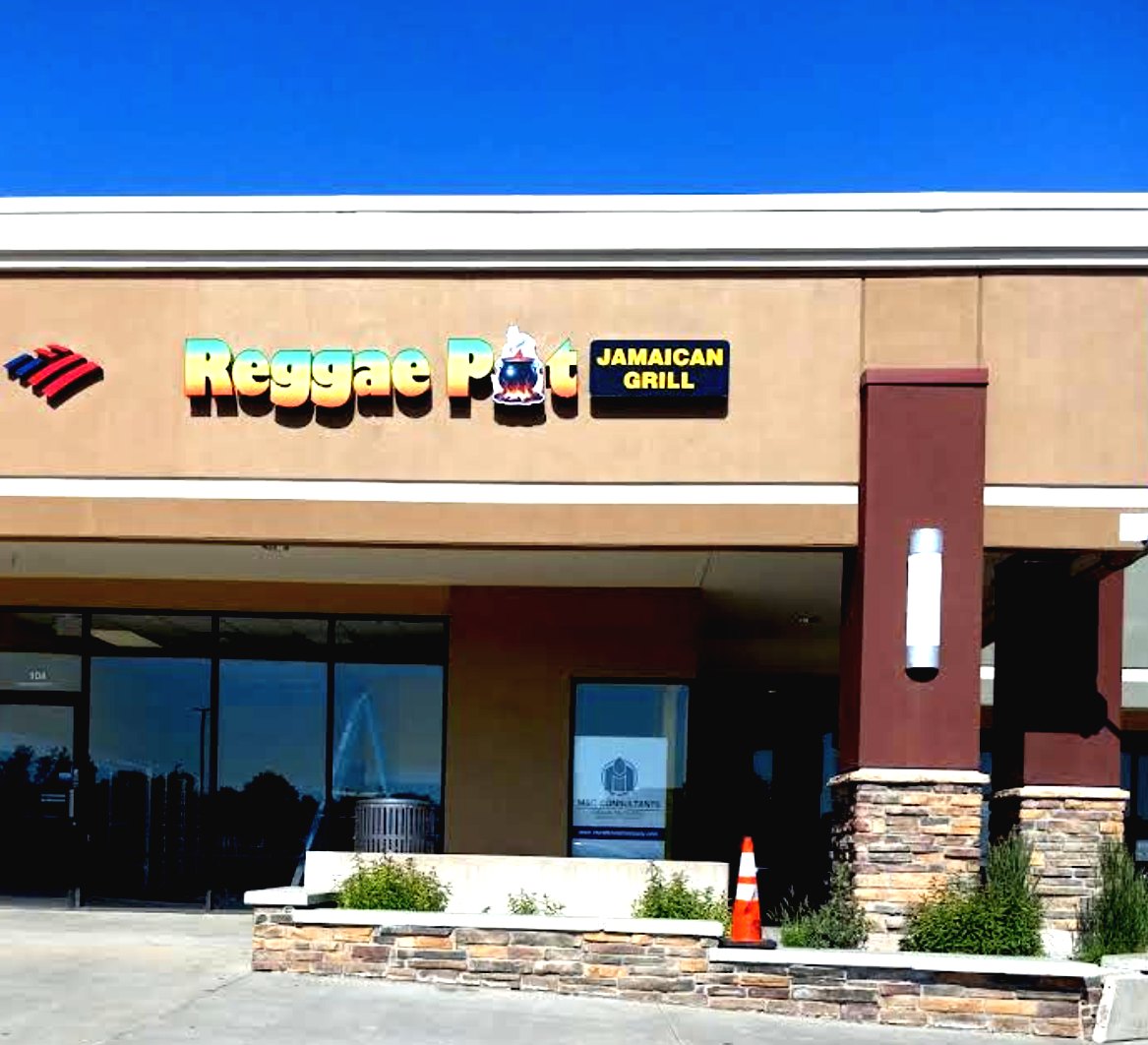
Reggae Pot Jamaican Grill
2243 S Monaco St Pkwy #104
Denver, CO 80222
+1 720-410-2956
FAQ About jamaican food
What is the best Jamaican food to try in Denver?
The best choice depends on your tastes. Popular options include jerk chicken, curry goat, slow-cooked oxtail, and savory patties. Reggae Pot lists these dishes on its menu, with sides such as rice and peas and plantains. Ask the Denver team about current availability and spice levels.
Is Jamaican food very spicy in Denver?
Heat varies by dish and preparation. Jerk seasoning often includes scotch bonnet peppers alongside herbs and allspice, while other dishes may have gentler seasoning. Ask about the heat of the specific dish and any sauce before ordering.
What are some popular Jamaican snacks?
Jamaican patties are a popular snack made with flaky pastry and savory meat or vegetable fillings. Other options include fried dumplings and festival, a sweet fried dough often served with savory dishes. Availability varies, so check the current menu when ordering.
Corrections
Spot something wrong? Send it to the desk and it gets fixed in the open.